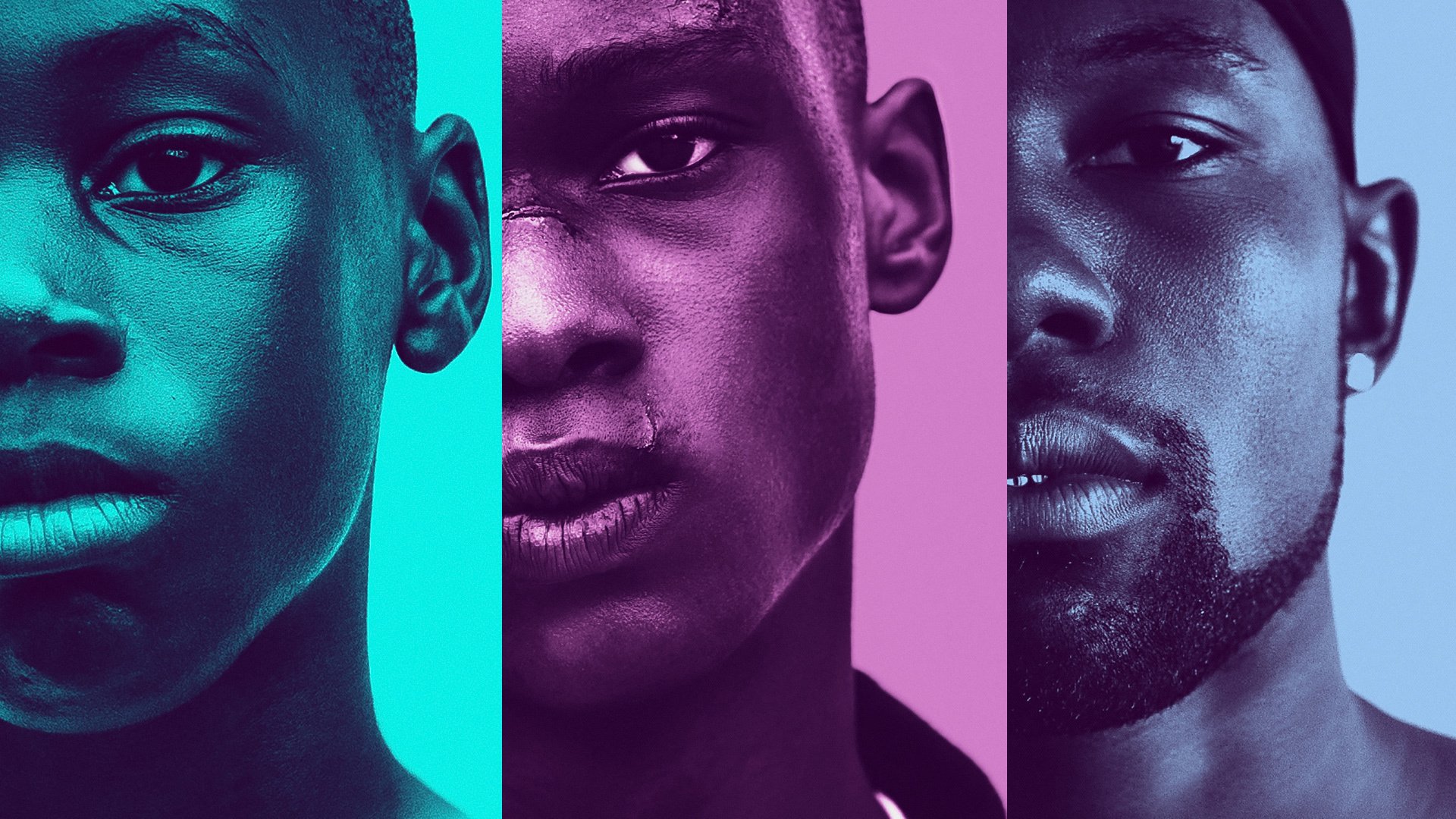
 Barry Jenkins used color grading to create three distinct visual chapters that reflect Chiron’s psychological journey. The first act swims in warm, golden tones—the colors of childhood memory, safety, and maternal love. The second act shifts to cooler, more muted colors—the uncertain blues and grays of adolescence and identity confusion. The final act is consumed with rich purples and magentas—colors of self-acceptance and adult complexity.
This isn’t just aesthetic choice; it’s emotional architecture. The color progression tells its own story about growing up, finding yourself, and learning to accept who you are. Each palette shift marks not just a time jump but a fundamental change in how Chiron sees and experiences the world. The tones also play a significant role in painting Liberty City, an impoverished section of Miami. Moonlight’s co-writer Tarell McCraney grew up in Liberty City and described it as “a beautiful nightmare”. Jenkin’s paints the nightmare in gorgeous tones that embrace the tension of the beauty juxtaposed with the very dark things that are happening to the characters in the story.
Linked Map of Contexts